New snowboarding teaching method: without falls and mistakes!
13 october 2025 в 23:37

Soon the mountain peaks around Los Angeles will be covered in white. Many will head to the slopes, where well-groomed resort trails await them. Today let’s talk about snowboarding. For some, the thought of it brings back memories of magical trips with the wind whistling in their ears; for others, it reminds them of the painful sensations of their first attempts and the disappointment of falls and failures.
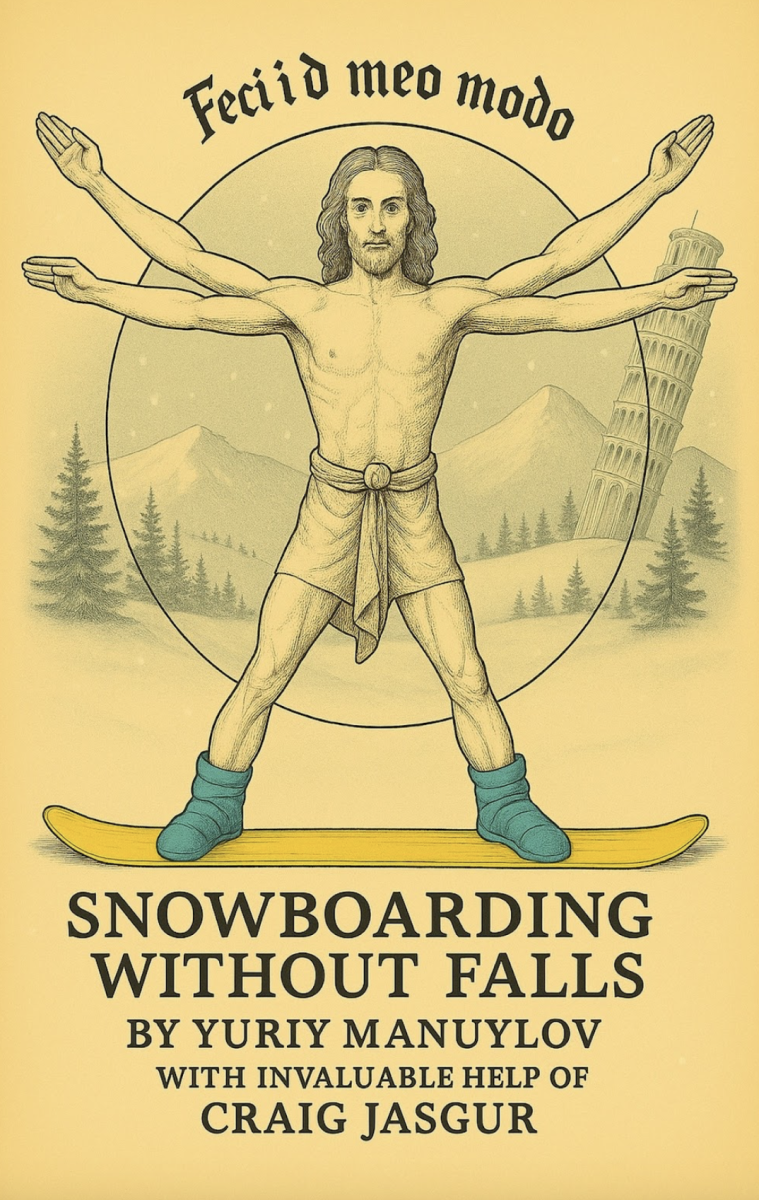
The book «Snowboarding Without Falls» by Yuri Manuylov reimagines the way snowboarding is taught, presenting a new approach specifically designed for beginners who, after their first lesson, thought, «Snowboarding is not for me» — or who still feel unsure when switching edges. You may not aspire to be a champion, but everyone wants to ride smoothly and confidently.
The problem with the classic method
The method, easily found online or in any snowboarding school at a resort, has hardly changed in decades. Instructors at resorts often follow a centralized teaching system that provides sequence and risk management. While this has certain advantages, strict adherence to this script leaves little room for experimentation or new ideas. Furthermore, instructors are usually paid regardless of their students' results. When the client has no choice, the results don’t matter as much.
Yuri Manuylov, the author of the SWF method, is a distinguished graduate and a silver medalist in the Ukrainian snowboarding championship. He spent 12 years experimenting with new teaching methods. His independent snowboarding school had to compete for students, motivating him to become better. When students left disappointed because of falls and failures, a new system was needed to address this.
Honesty
The vast majority of beginners ask one question: «How do I stop?» They expect a clear answer on the first lesson. However, every instructor knows that after the first group lesson, about 80% of students still can’t stop or turn without falling. If you’re not a surfer, skier, skateboarder, etc., you’re probably in that 80%.
The student wants to stop; the instructor agrees. It seems right, but imagine a builder starting construction without a foundation just because the client wants to see the walls quickly. In his book, Yuri suggests starting with a foundation. And once that foundation is laid, SWF teaches you not «how to brake», - but how to ride correctly.
Foundation
In any sport, preparation has three stages:
According to the classic method, your first lesson starts with turns and stops — immediately moving to step 3. This leads to mistakes and falls. Falls undermine confidence and often hinder students from returning.
However, sports science tells us to start with GPP, performing a wide range of activities in the off-season. This is the student’s responsibility. But SWF starts with specific physical preparation, offering a set of exercises that develop balance, activate muscle groups specific to snowboarding, and reprogram movement habits that often lead to falls. These exercises are accessible to students of any physical fitness level. You won’t learn to stop on the first lesson, but you’ll develop a set of skills that will help you turn and stop more smoothly and confidently on the second.
23 original exercises
Manuylov’s method includes 23 original exercises, accessible to almost everyone. Each one is accompanied by detailed instructions, common mistakes, and even descriptions of the sensations you should experience while performing them. You’ll learn how to «fall without falling», - how to be like the Leaning Tower of Pisa, and why snowboarders represent the highest stage of evolution (joke).
What you won’t find are harmful exercises from the classic system, such as:
Starting with the heel edge
If the classic method starts with the heel edge, SWF starts with the toe edge. Yuri explains that beginners have precise control on the toe edge
The book «Snowboarding Without Falls» by Yuri Manuylov reimagines the way snowboarding is taught, presenting a new approach specifically designed for beginners who, after their first lesson, thought, «Snowboarding is not for me» — or who still feel unsure when switching edges. You may not aspire to be a champion, but everyone wants to ride smoothly and confidently.
The problem with the classic method
The method, easily found online or in any snowboarding school at a resort, has hardly changed in decades. Instructors at resorts often follow a centralized teaching system that provides sequence and risk management. While this has certain advantages, strict adherence to this script leaves little room for experimentation or new ideas. Furthermore, instructors are usually paid regardless of their students' results. When the client has no choice, the results don’t matter as much.
Yuri Manuylov, the author of the SWF method, is a distinguished graduate and a silver medalist in the Ukrainian snowboarding championship. He spent 12 years experimenting with new teaching methods. His independent snowboarding school had to compete for students, motivating him to become better. When students left disappointed because of falls and failures, a new system was needed to address this.
Honesty
The vast majority of beginners ask one question: «How do I stop?» They expect a clear answer on the first lesson. However, every instructor knows that after the first group lesson, about 80% of students still can’t stop or turn without falling. If you’re not a surfer, skier, skateboarder, etc., you’re probably in that 80%.
The student wants to stop; the instructor agrees. It seems right, but imagine a builder starting construction without a foundation just because the client wants to see the walls quickly. In his book, Yuri suggests starting with a foundation. And once that foundation is laid, SWF teaches you not «how to brake», - but how to ride correctly.
Foundation
In any sport, preparation has three stages:
According to the classic method, your first lesson starts with turns and stops — immediately moving to step 3. This leads to mistakes and falls. Falls undermine confidence and often hinder students from returning.
However, sports science tells us to start with GPP, performing a wide range of activities in the off-season. This is the student’s responsibility. But SWF starts with specific physical preparation, offering a set of exercises that develop balance, activate muscle groups specific to snowboarding, and reprogram movement habits that often lead to falls. These exercises are accessible to students of any physical fitness level. You won’t learn to stop on the first lesson, but you’ll develop a set of skills that will help you turn and stop more smoothly and confidently on the second.
23 original exercises
Manuylov’s method includes 23 original exercises, accessible to almost everyone. Each one is accompanied by detailed instructions, common mistakes, and even descriptions of the sensations you should experience while performing them. You’ll learn how to «fall without falling», - how to be like the Leaning Tower of Pisa, and why snowboarders represent the highest stage of evolution (joke).
What you won’t find are harmful exercises from the classic system, such as:
Starting with the heel edge
If the classic method starts with the heel edge, SWF starts with the toe edge. Yuri explains that beginners have precise control on the toe edge
© Puhova Marina