
«Hunting moon: the third supermoon of the year illuminated the sky»
18 october 2024 в 06:13
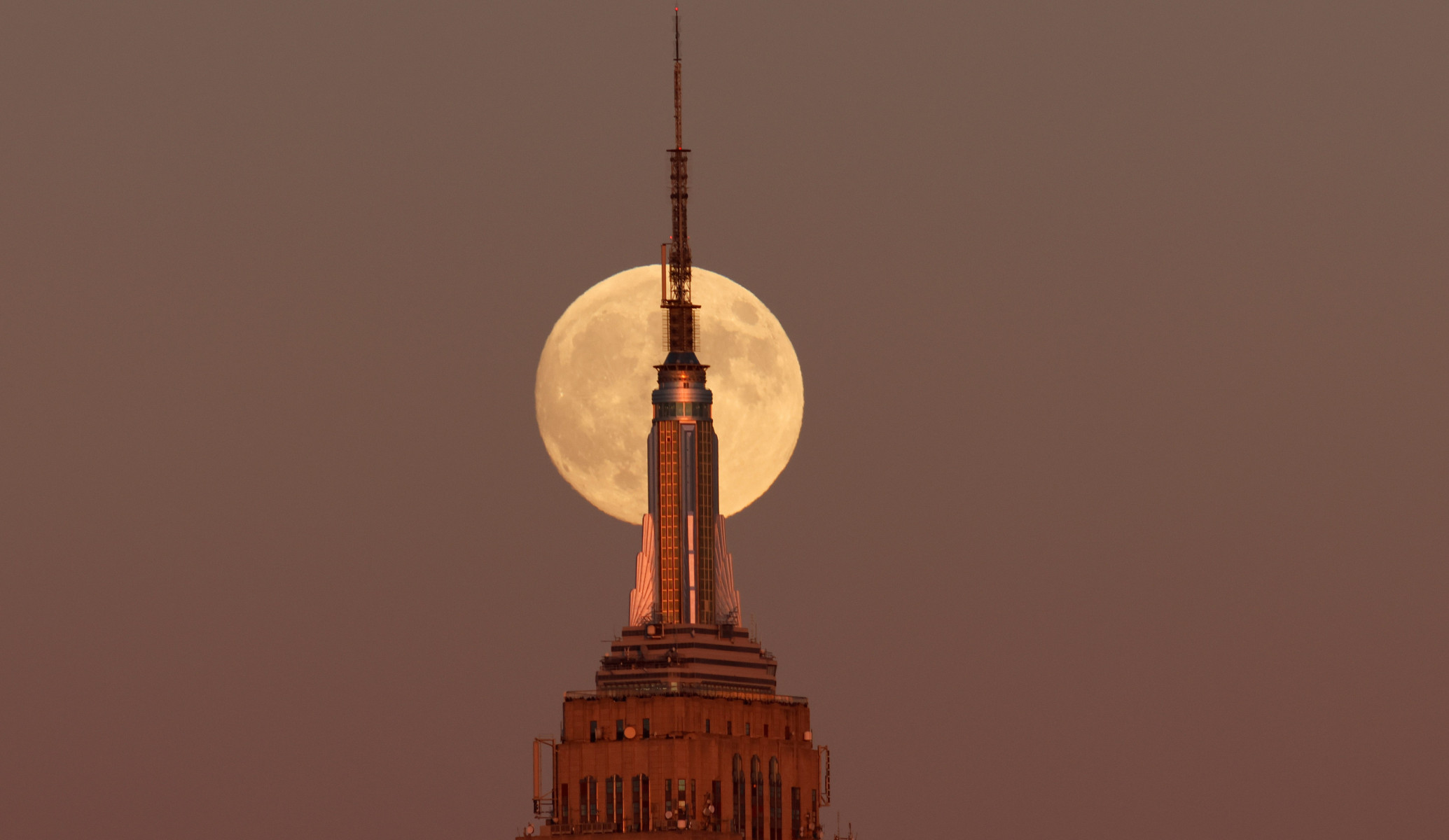
Stargazers will be delighted as the largest supermoon of the year, known as the Hunter’s Moon, adorns the sky.
This is the third of four supermoons this year, appearing even larger and brighter than in August and September. It reached its full moon phase on Thursday, October 17, with peak illumination in the United States at 7:26 a.m. Eastern Time, according to NASA.
Additionally, it coincides with the comet C/2023 A3, also known as Comet ATLAS, which is currently shining brightly and visible to the naked eye at magnitude +0.5.
The Old Farmer’s Almanac, which first began publishing names for full moons in the 1930s, claims that the full moon was named the «Hunter's Moon» because it marked the beginning of the hunting season, signaling hunters to prepare for the approaching cold.
According to the publication, after the fields were harvested during the Harvest Moon — the full moon that appears before the Hunter’s Moon — hunters could easily spot animals coming out to forage, as well as foxes waiting to attack. Other sources also refer to this full moon as the Sanguine or Blood Moon, associating it with the blood from hunting or the color of changing autumn leaves.
«The next Full Moon — it’s a Supermoon; Hunter’s Moon; Travel Moon, Dying Grass Moon, or Sanguine or Blood Moon; the beginning of Sukkot; Sharad Purnima, Kumara Purnima, Kojagari Purnima, Navanna Purnima, Kojagrat Purnima, or Kaumudi Purnima; the end of Vassa and Pavarana; Thadingyut Moon Festival; the end of the Phaung Daw U Pagoda Festival; and Vap Poya», - wrote NASA sky observer Gordon Johnston.
If you missed today’s spectacle, the next supermoon can be seen on November 15, 2024. This is the last supermoon in this year’s series
This is the third of four supermoons this year, appearing even larger and brighter than in August and September. It reached its full moon phase on Thursday, October 17, with peak illumination in the United States at 7:26 a.m. Eastern Time, according to NASA.
Additionally, it coincides with the comet C/2023 A3, also known as Comet ATLAS, which is currently shining brightly and visible to the naked eye at magnitude +0.5.
The Old Farmer’s Almanac, which first began publishing names for full moons in the 1930s, claims that the full moon was named the «Hunter's Moon» because it marked the beginning of the hunting season, signaling hunters to prepare for the approaching cold.
According to the publication, after the fields were harvested during the Harvest Moon — the full moon that appears before the Hunter’s Moon — hunters could easily spot animals coming out to forage, as well as foxes waiting to attack. Other sources also refer to this full moon as the Sanguine or Blood Moon, associating it with the blood from hunting or the color of changing autumn leaves.
«The next Full Moon — it’s a Supermoon; Hunter’s Moon; Travel Moon, Dying Grass Moon, or Sanguine or Blood Moon; the beginning of Sukkot; Sharad Purnima, Kumara Purnima, Kojagari Purnima, Navanna Purnima, Kojagrat Purnima, or Kaumudi Purnima; the end of Vassa and Pavarana; Thadingyut Moon Festival; the end of the Phaung Daw U Pagoda Festival; and Vap Poya», - wrote NASA sky observer Gordon Johnston.
If you missed today’s spectacle, the next supermoon can be seen on November 15, 2024. This is the last supermoon in this year’s series
© Smirnova Olga