The translation of the text «Семейные драмы Бекхэмов: любовь и боль на виду у всех» into English is: «The Beckham family’s dramas: love and pain in plain sight»
4 july 2026 в 18:13

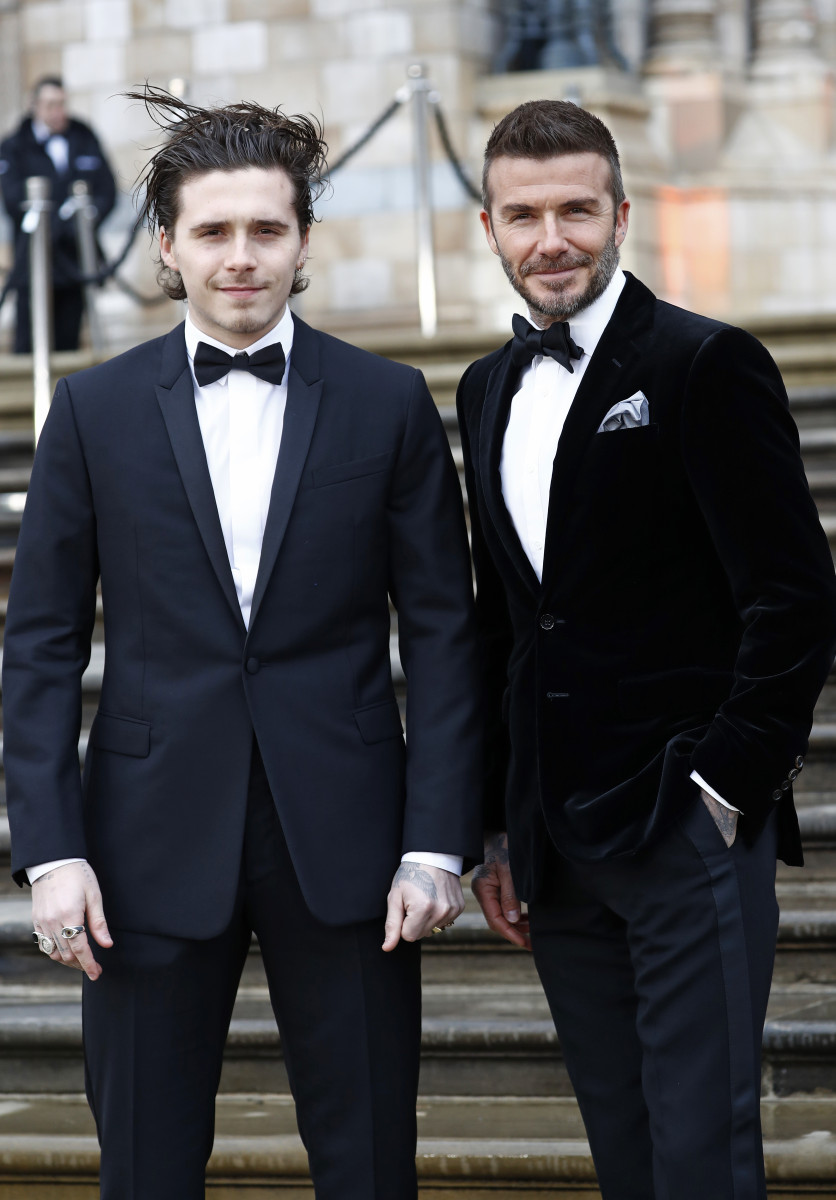
David Beckham did what no famous person wants to do on Father’s Day. He posted a message saying «I love you» for his son, who is not speaking to him. Brooklyn Beckham once again did not appear in family photos. This is the second year in a row.
This comes after a DoorDash ad featuring Brooklyn, which fans interpreted as a public jab at his father. Now we see the father posting loving messages online, while the son responds with a subtle advertising hint that millions are watching.
People have already started to take sides. Team David. Team Brooklyn. Team Nicola. Team Victoria.
I want to propose something different. Because what is happening in the Beckham family is not a story about villains. It is something much older, more human, and, frankly, much more painful than gossip suggests.
Here’s what I see in my office every week and what I observe on the screen of your phone.
Two people who love each other are constantly searching for answers to two questions. Are you here for me? And am I enough for you?
This search continues from the cradle to the grave. It is not optional. Your nervous system is wired for it. And when the answer comes back as «no», - your body perceives it as a threat to survival. Not metaphorically. Literally. The same alarm signal goes off when you almost get hit by a bus and when you feel cut off from someone who should be your support.
What do we do? We protest.
Brooklyn’s jab in the ad looks like a cold rejection on the surface. To me, it looks like a protest. A boomerang thrown from pain, meant for protection, that hurts whoever it hits and then comes back to hurt the thrower. Beneath every such protest lies a wound. An inner feeling: you are leaving me, so you are unacceptable to me. It is an attempt to stop an internal fear.
David’s post with «I love you» is also a public attempt. An attempt that meets with distance touches on another core wound. Am I enough for you? It relates to the fear that no matter what you do, you cannot be a good father.
The father feels rejected. The son feels unnoticed. And now they are locked in what I call the «Waltz of Pain». Two childhood defenders collide. Both suffer. Both are convinced that the problem lies with the other. No one is the problem. The problem is the system.
Here’s my counterintuitive perspective that culture almost always overlooks.
The only reason David and Brooklyn are fighting so intensely is that they love each other.
If David didn’t matter to Brooklyn, Brooklyn wouldn’t make a public jab. If Brooklyn didn’t matter to David, he wouldn’t send public olive branches on Father’s Day. The intensity of the conflict corresponds to the intensity of love. If you didn’t care, you wouldn’t protest.
And we need to show real compassion for the fact that they are doing this in public. Most families can quietly endure failures. They can say the wrong thing on Thanksgiving and try to make up for it at Christmas. The Beckhams don’t have that luxury. Every mistake is recorded, archived, replayed, and monetized by strangers. Public attention is a huge amplifier of shame. And when people feel shame, we retreat into ourselves, attack ourselves, or lash out at those we love the most. Sometimes we go silent to the point that it looks like cruelty, but in reality, it is self-defense, a kind of emotional detachment born from fear rather than malice.
If you’ve ever wondered which version of this cycle you’re stuck in with your parent or partner, the Empathi relationship test is not a bad place to start being honest with yourself.
I constantly see this dynamic in my office. A father and son sit on my couch discussing a missed message, an Instagram post, a holiday dinner. They think they are arguing over an issue. The issue is a distraction. In reality, I see two scared children in adult bodies who both need each other but cannot admit it
This comes after a DoorDash ad featuring Brooklyn, which fans interpreted as a public jab at his father. Now we see the father posting loving messages online, while the son responds with a subtle advertising hint that millions are watching.
People have already started to take sides. Team David. Team Brooklyn. Team Nicola. Team Victoria.
I want to propose something different. Because what is happening in the Beckham family is not a story about villains. It is something much older, more human, and, frankly, much more painful than gossip suggests.
Here’s what I see in my office every week and what I observe on the screen of your phone.
Two people who love each other are constantly searching for answers to two questions. Are you here for me? And am I enough for you?
This search continues from the cradle to the grave. It is not optional. Your nervous system is wired for it. And when the answer comes back as «no», - your body perceives it as a threat to survival. Not metaphorically. Literally. The same alarm signal goes off when you almost get hit by a bus and when you feel cut off from someone who should be your support.
What do we do? We protest.
Brooklyn’s jab in the ad looks like a cold rejection on the surface. To me, it looks like a protest. A boomerang thrown from pain, meant for protection, that hurts whoever it hits and then comes back to hurt the thrower. Beneath every such protest lies a wound. An inner feeling: you are leaving me, so you are unacceptable to me. It is an attempt to stop an internal fear.
David’s post with «I love you» is also a public attempt. An attempt that meets with distance touches on another core wound. Am I enough for you? It relates to the fear that no matter what you do, you cannot be a good father.
The father feels rejected. The son feels unnoticed. And now they are locked in what I call the «Waltz of Pain». Two childhood defenders collide. Both suffer. Both are convinced that the problem lies with the other. No one is the problem. The problem is the system.
Here’s my counterintuitive perspective that culture almost always overlooks.
The only reason David and Brooklyn are fighting so intensely is that they love each other.
If David didn’t matter to Brooklyn, Brooklyn wouldn’t make a public jab. If Brooklyn didn’t matter to David, he wouldn’t send public olive branches on Father’s Day. The intensity of the conflict corresponds to the intensity of love. If you didn’t care, you wouldn’t protest.
And we need to show real compassion for the fact that they are doing this in public. Most families can quietly endure failures. They can say the wrong thing on Thanksgiving and try to make up for it at Christmas. The Beckhams don’t have that luxury. Every mistake is recorded, archived, replayed, and monetized by strangers. Public attention is a huge amplifier of shame. And when people feel shame, we retreat into ourselves, attack ourselves, or lash out at those we love the most. Sometimes we go silent to the point that it looks like cruelty, but in reality, it is self-defense, a kind of emotional detachment born from fear rather than malice.
If you’ve ever wondered which version of this cycle you’re stuck in with your parent or partner, the Empathi relationship test is not a bad place to start being honest with yourself.
I constantly see this dynamic in my office. A father and son sit on my couch discussing a missed message, an Instagram post, a holiday dinner. They think they are arguing over an issue. The issue is a distraction. In reality, I see two scared children in adult bodies who both need each other but cannot admit it
© Smirnova Olga