Sydney Sweeney and Scooter Braun: What’s Behind Their Public Romance
6 may 2026 в 00:37


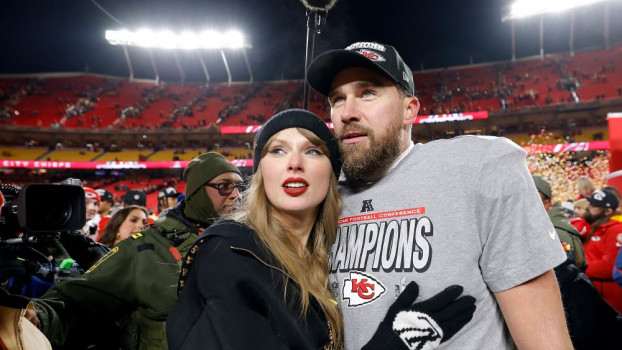
Sydney Sweeney brought Scooter Braun to the Stagecoach festival, hugged him in front of everyone in the desert, and let the internet do the rest. The hard launch is complete. Cowboy hats, hands in pockets — it’s all part of the show.
The internet did what it does best: power, age difference, PR strategy. Someone has already written an article about what this means for her brand.
I’m not interested in that. I want to understand what happens to two people when they decide to be together so loudly, publicly, and quickly. I see the same pattern in my office in San Francisco, just without festival photographers.
Here’s what no one says out loud about a hard launch. We are programmed for connection from the moment we are born until the moment we die. We are an interdependent species. The moment you were born a hundred thousand years ago on the African savannas, you needed someone to take care of you, or you wouldn’t survive. This biology doesn’t care that you’re a movie star. It operates on the same principle for Sydney Sweeney as it does for your accountant.
Now add celebrity to the mix. Every move is under observation, evaluation, commentary, saving, sharing, screenshots, and archiving. It’s an aquarium, and outside are two villages, each with its own opinion.
In such an environment, people rely on what I call protective character strategies. One of them, which I know well both clinically and personally, is the Seducer. When this part is in control, your worth in love and life is determined solely by whether someone wants you. Can you present the desired version of yourself that you think you should be?
The hard launch with emotional displays at a country music festival is the Seducer in full bloom. It’s a public, beautiful, completely human response to the two questions every couple always asks each other beneath the surface: Are you here for me? Am I good enough for you? When the cameras click, the answer seems to be «yes».
This is what the gossip-driven approach completely overlooks. An executive romance is not a sham. It’s just an early stage. And what follows is more complicated than the launch itself.
I constantly tell couples about this, and they start to get nervous. Your sexual side has met your partner. Now your vulnerable side has to make love with them.
I have my own story about this. Much of my ego stability used to depend on how I was perceived: as the attractive, desirable, seductive guy in the room. I now feel uncomfortable about how central that was to who I thought I was. The romantic phase of any relationship feeds on that energy. It feels electric because it’s based on being chosen, desired, publicly acknowledged.
But the sexual side cannot sustain a relationship. If we don’t create space for the vulnerable side to be the one who experiences intimacy, we ultimately won’t be close at all. The dynamic where the desired persona stays in view while the true heart hides is one of the most common patterns I see, and it’s one of the quiet factors behind the science of signs that a husband doesn’t want you sexually, and the hundreds of other stories of «we used to want each other so much, what happened?»
If you want to know which protective strategy is governing your relationship when the cameras are off, you can take a free relationship assessment. Most people are surprised by the results. The Seducer is just one of several strategies.
The cultural reflex in the case of such a couple is to try to diagnose someone. Is he using her? Is she using him? Is one of them a narcissist? Is the other naive?
I want to be very straightforward about this. Such analysis is fast food. It’s the equivalent of relationship help as a bag of M&M's for dinner. People want to consume it because it’s sweet, definitive, and allows for blaming someone. You’ll eat the whole bag. After that, you’ll feel terrible.
The story of others never leads to growth. It never leads to healing
The internet did what it does best: power, age difference, PR strategy. Someone has already written an article about what this means for her brand.
I’m not interested in that. I want to understand what happens to two people when they decide to be together so loudly, publicly, and quickly. I see the same pattern in my office in San Francisco, just without festival photographers.
Here’s what no one says out loud about a hard launch. We are programmed for connection from the moment we are born until the moment we die. We are an interdependent species. The moment you were born a hundred thousand years ago on the African savannas, you needed someone to take care of you, or you wouldn’t survive. This biology doesn’t care that you’re a movie star. It operates on the same principle for Sydney Sweeney as it does for your accountant.
Now add celebrity to the mix. Every move is under observation, evaluation, commentary, saving, sharing, screenshots, and archiving. It’s an aquarium, and outside are two villages, each with its own opinion.
In such an environment, people rely on what I call protective character strategies. One of them, which I know well both clinically and personally, is the Seducer. When this part is in control, your worth in love and life is determined solely by whether someone wants you. Can you present the desired version of yourself that you think you should be?
The hard launch with emotional displays at a country music festival is the Seducer in full bloom. It’s a public, beautiful, completely human response to the two questions every couple always asks each other beneath the surface: Are you here for me? Am I good enough for you? When the cameras click, the answer seems to be «yes».
This is what the gossip-driven approach completely overlooks. An executive romance is not a sham. It’s just an early stage. And what follows is more complicated than the launch itself.
I constantly tell couples about this, and they start to get nervous. Your sexual side has met your partner. Now your vulnerable side has to make love with them.
I have my own story about this. Much of my ego stability used to depend on how I was perceived: as the attractive, desirable, seductive guy in the room. I now feel uncomfortable about how central that was to who I thought I was. The romantic phase of any relationship feeds on that energy. It feels electric because it’s based on being chosen, desired, publicly acknowledged.
But the sexual side cannot sustain a relationship. If we don’t create space for the vulnerable side to be the one who experiences intimacy, we ultimately won’t be close at all. The dynamic where the desired persona stays in view while the true heart hides is one of the most common patterns I see, and it’s one of the quiet factors behind the science of signs that a husband doesn’t want you sexually, and the hundreds of other stories of «we used to want each other so much, what happened?»
If you want to know which protective strategy is governing your relationship when the cameras are off, you can take a free relationship assessment. Most people are surprised by the results. The Seducer is just one of several strategies.
The cultural reflex in the case of such a couple is to try to diagnose someone. Is he using her? Is she using him? Is one of them a narcissist? Is the other naive?
I want to be very straightforward about this. Such analysis is fast food. It’s the equivalent of relationship help as a bag of M&M's for dinner. People want to consume it because it’s sweet, definitive, and allows for blaming someone. You’ll eat the whole bag. After that, you’ll feel terrible.
The story of others never leads to growth. It never leads to healing
© Puhova Marina