
Japan on the brink: the first «megathrust earthquake» and tsunami caused panic
15 august 2024 в 05:02
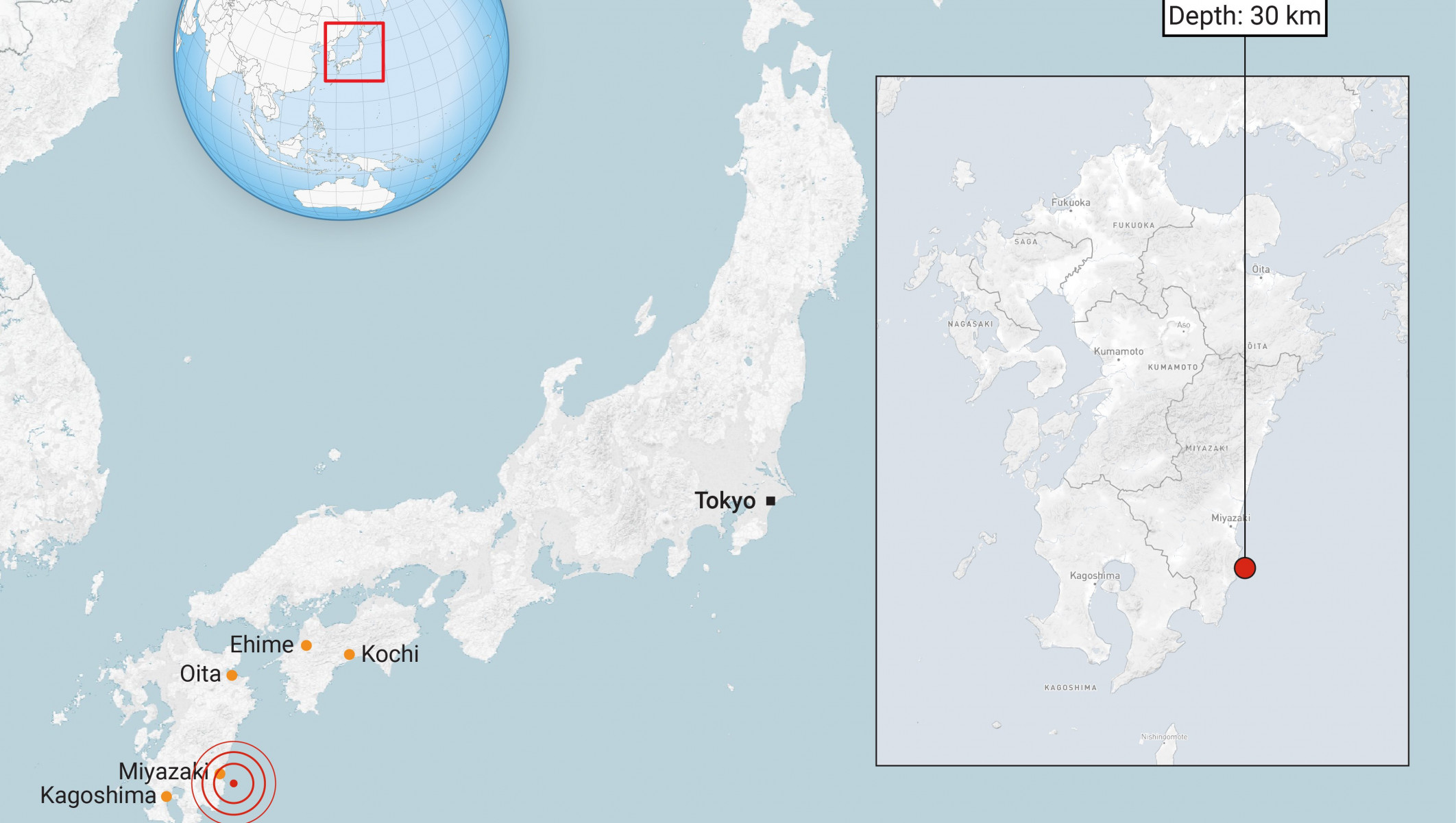
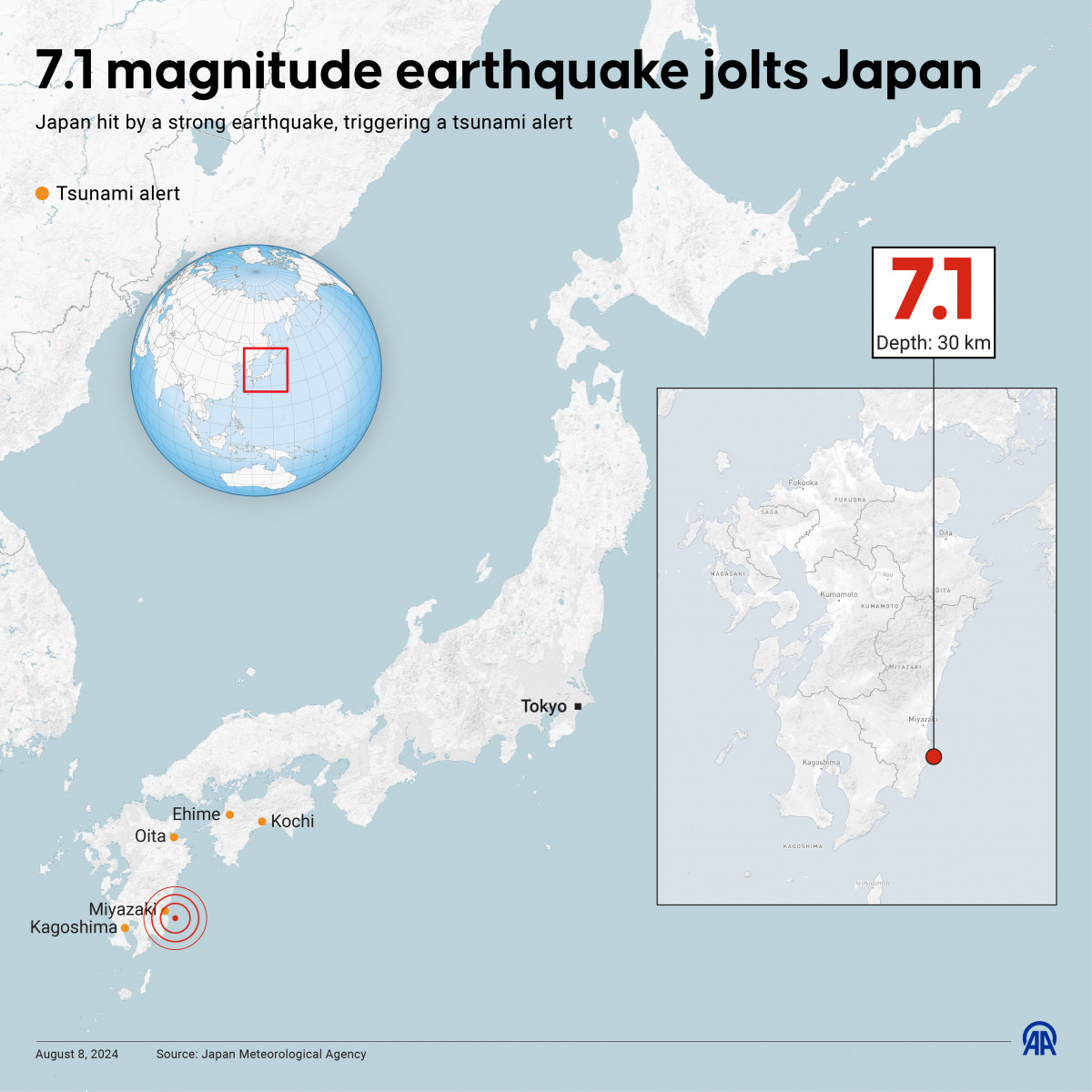
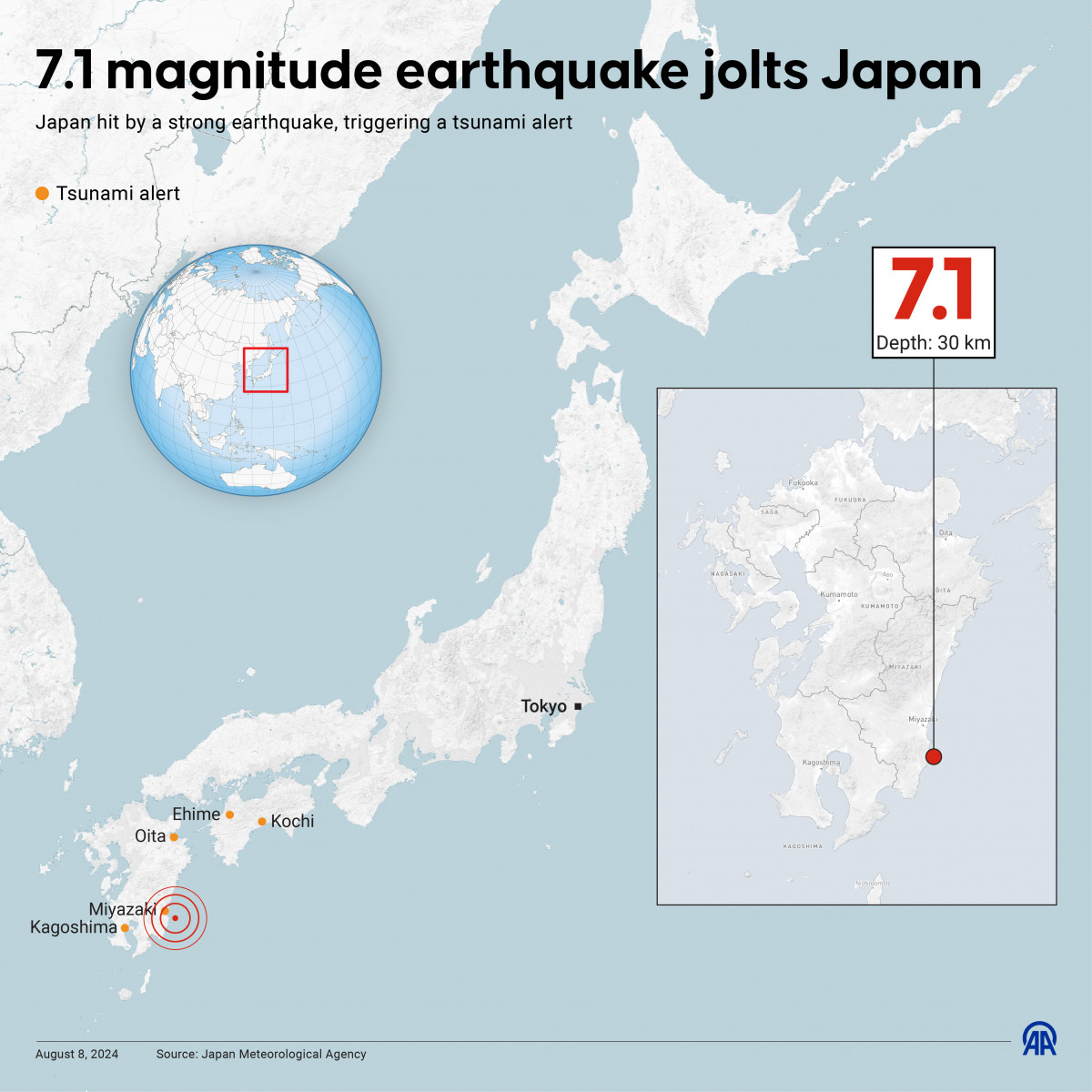
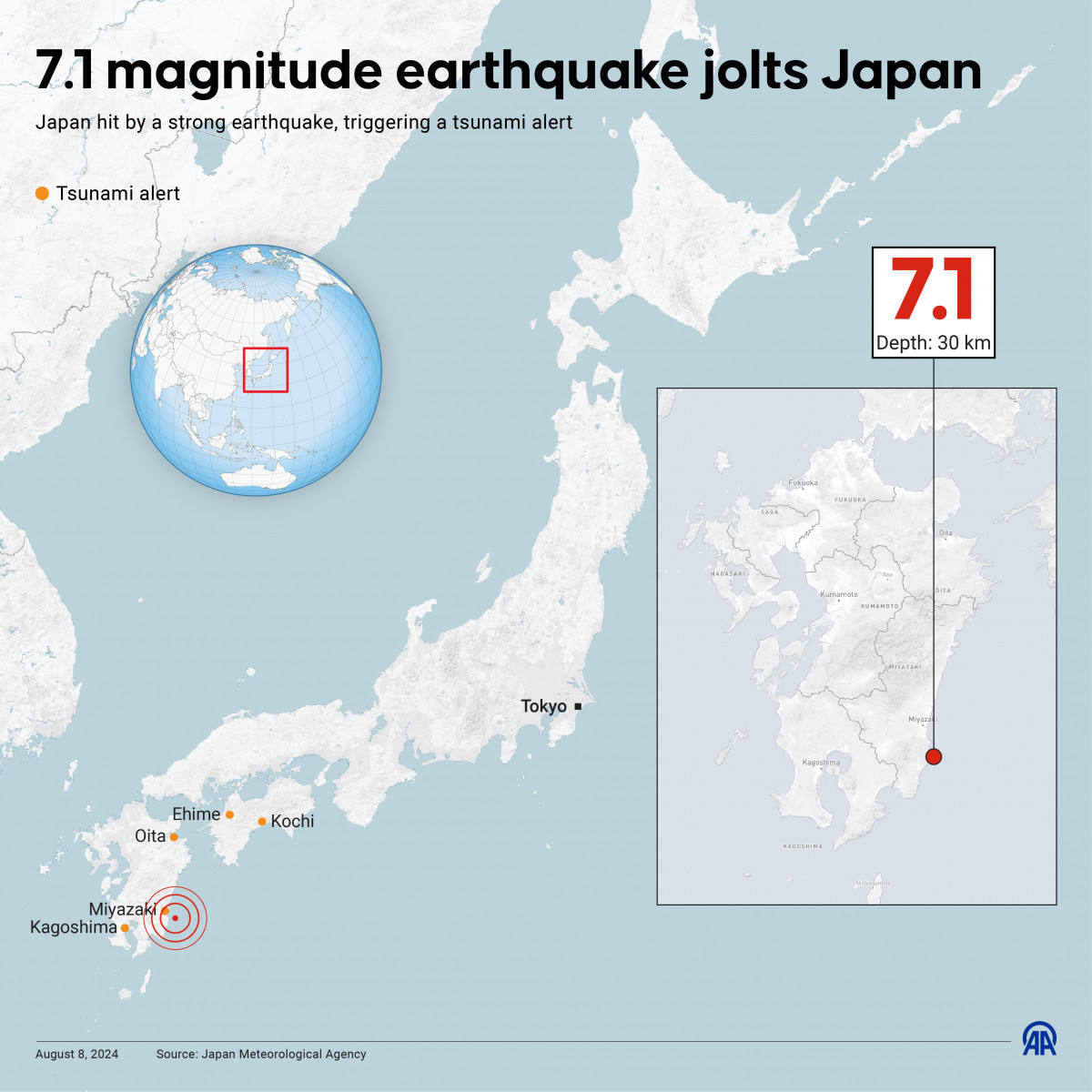
Local and national authorities in Japan took the initiative by issuing a temporary tsunami warning last week after a powerful earthquake occurred approximately 12 miles southeast of the city of Miyazaki on the island of Kyushu, marking the first «megathrust earthquake» in history.
On Thursday, August 8, the earthquake registered a magnitude of 7.1, according to USGS data.
The earthquake did not result in any casualties or serious damage, but the warning issued by the Japan Meteorological Agency caused widespread confusion and lingering feelings of unease — even in a country accustomed to regular earthquakes. (Japan is located on the Ring of Fire, an area of intense seismic and volcanic activity on both sides of the Pacific Ocean).
«Japan is located at the boundaries of four tectonic plates, making it one of the most earthquake-prone regions in the world», - said Professor Shoichi Yoshioka from Kobe University in Japan. «Approximately 10% of earthquakes with a magnitude of 6 or higher occur in Japan or its vicinity, so the risk here is much higher than in places like Europe or the east coast of the United States, where earthquakes are rare», - Yoshioka added.
With the first «megathrust earthquake» in its history, the agency stated that the risk of strong tremors and tsunamis is higher than usual along the Nankai Trough, a subduction zone with the potential to generate earthquakes of magnitude 8 or 9.
The possibility that the earthquake, which occurred at 16:43 local time (00:43 EST), was a precursor to a larger earthquake always raises concerns, but with each passing hour, this becomes less likely, said Ole Kaven, a USGS research geophysicist.
«The rule is that there is a 5% chance that an event of greater magnitude than the main shock will occur, and this probability will decrease over time», - he said.
Harold Tobin, a professor at the University of Washington who has studied the Nankai Trough, noted that the 7.1 magnitude earthquake occurred in a segment that is more prone to tremors than others. Regular earthquakes can release tension, so the likelihood of this segment causing a major earthquake on its own is less worrisome.
The most devastating earthquake in recent Japanese history was the 9.1 magnitude earthquake in Tohoku in 2011, which triggered a powerful tsunami and a nuclear disaster. Approximately 20,000 people lost their lives
On Thursday, August 8, the earthquake registered a magnitude of 7.1, according to USGS data.
The earthquake did not result in any casualties or serious damage, but the warning issued by the Japan Meteorological Agency caused widespread confusion and lingering feelings of unease — even in a country accustomed to regular earthquakes. (Japan is located on the Ring of Fire, an area of intense seismic and volcanic activity on both sides of the Pacific Ocean).
«Japan is located at the boundaries of four tectonic plates, making it one of the most earthquake-prone regions in the world», - said Professor Shoichi Yoshioka from Kobe University in Japan. «Approximately 10% of earthquakes with a magnitude of 6 or higher occur in Japan or its vicinity, so the risk here is much higher than in places like Europe or the east coast of the United States, where earthquakes are rare», - Yoshioka added.
With the first «megathrust earthquake» in its history, the agency stated that the risk of strong tremors and tsunamis is higher than usual along the Nankai Trough, a subduction zone with the potential to generate earthquakes of magnitude 8 or 9.
The possibility that the earthquake, which occurred at 16:43 local time (00:43 EST), was a precursor to a larger earthquake always raises concerns, but with each passing hour, this becomes less likely, said Ole Kaven, a USGS research geophysicist.
«The rule is that there is a 5% chance that an event of greater magnitude than the main shock will occur, and this probability will decrease over time», - he said.
Harold Tobin, a professor at the University of Washington who has studied the Nankai Trough, noted that the 7.1 magnitude earthquake occurred in a segment that is more prone to tremors than others. Regular earthquakes can release tension, so the likelihood of this segment causing a major earthquake on its own is less worrisome.
The most devastating earthquake in recent Japanese history was the 9.1 magnitude earthquake in Tohoku in 2011, which triggered a powerful tsunami and a nuclear disaster. Approximately 20,000 people lost their lives
© Zhinobaeva Margarita